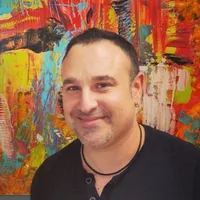
I have worked in addiction treatment for twenty-two years. I have served in nonprofit and for-profit systems. I began my career in Brooklyn. I later worked extensively within the Florida model. I have watched residential programs save lives. I have also watched the same people return again and again, not because they did not care, not because they were unwilling, but because they were never taught how to live sober in the world they actually had to return to.
One truth has become unmistakably clear over time: Sobriety is not proven in treatment. It is proven in life.
A person can remain sober for weeks or months in a highly controlled environment. That matters. Sometimes it is lifesaving. But recovery is not meant to exist in suspension. It is meant to exist in motion.
Recovery is not something you demonstrate inside a program. It is something you live on Monday morning. When the alarm goes off. When stress returns. When relationships resume. When the world no longer pauses for treatment.
Extended care exists for this exact reason.
Partial Hospitalization, Intensive Outpatient, and Outpatient levels of care were never designed to be afterthoughts. They were designed to be the bridge between insight and application. They are where people stop talking about change and begin living it.
In extended care, a client does not just learn how to manage cravings. They manage them after a long workday. They do not just role-play boundaries. They set them with family. They do not just discuss stress. They experience it, regulate it, and return to process it.
This is where recovery becomes real.
Clients Need to Launch Back Into Their Lives
Treatment should not halt a person’s life. It should support their return to it.
Clients need to go back to work while still being held by care. They need to return to their families while still having a place to process. They need to navigate bills, relationships, conflict, fatigue, temptation, and responsibility with support still in place.
Extended care allows that to happen safely.
Research consistently shows that relapse risk is highest in the first year following discharge from acute treatment (National Institute on Drug Abuse [NIDA], 2020). The issue is not motivation. It is exposure without scaffolding.
We do not build resilience by shielding people from life. We build it by teaching them how to live.
Recovery Lives in Community
Addiction is an illness of disconnection. Recovery is an act of reconnection.
Extended care returns people to their communities while still anchoring them in treatment. Clients begin rebuilding sober social networks, work identity, family roles, daily routines, and personal responsibility.
They are no longer “in treatment” apart from the world. They are in life with treatment walking beside them.
Historically, recovery has always been community-based. Long before modern programs existed, people recovered through fellowship, shared experience, and accountability. Recovery lived in neighborhoods, churches, basements, union halls, and living rooms.
Today, those community-based models are disappearing.
PHP, IOP, and OP programs are closing across the country, not because they are ineffective, but because they are increasingly unreimbursed. Payers undervalue the slow, relational work of recovery. They reimburse crisis. They reimburse detox. They reimburse containment. They do not reimburse integration.
As a result, the system is being reshaped by economics rather than outcomes.
SAMHSA reports a significant decline in the availability of PHP and IOP services over the past decade (SAMHSA, 2021). At the same time, detox and residential beds continue to expand. The industry is becoming increasingly weighted toward acute stabilization and away from sustained, community-based care.
We are building more places for people to stop using. We are building fewer places for people to learn how to live.
The Cost of a Crisis-Only Model
Residential treatment and detox save lives. They are essential. But when they become the dominant answer, recovery becomes episodic rather than developmental.
Despite more than $35 billion spent annually on addiction treatment, long-term outcomes remain stubbornly flat (Rudd et al., 2021). Too many individuals move from program to program without ever learning how to stay sober where they actually live.
What we are witnessing is not failure of effort. It is a structural mismatch between how recovery actually works and how it is financed.
We keep pulling people out of their lives. We keep stabilizing them. We keep sending them back without scaffolding.
And we call the relapse a personal failure.
It is not.
It is a systems failure.
Recovery does not happen in exile. It happens in context.
What This Looks Like in Practice
At Sunview Wellness, we operate exclusively at the PHP, IOP, and OP levels of care. We do not provide housing. Our clients live in their homes, with their families, in their communities.
They deal with traffic. They go to work. They argue with spouses. They manage bills. They feel overwhelmed.
And then they come to treatment to process what actually happened.
Our job is not to help people stay sober in a controlled environment. Our job is to help them stay sober and thrive in life.
Extended care is not a step-down. It is the proving ground of recovery.
The Bottom Line
Getting sober is an event. Staying sober is a practice.
Extended care is where that practice becomes possible.
Recovery does not live in treatment centers. It lives in homes, offices, grocery stores, relationships, and communities. If we want lasting change, we must meet people where their lives are actually happening.
The future of addiction treatment is not longer isolation. It is stronger integration.
And the disappearance of community based care should alarm every one of us who truly cares about outcomes.
What This Means for Outpatient Treatment
Summary by the Sunview Wellness team
Frank’s article describes the idea Sunview Wellness is built on: recovery has to be practiced where a person actually lives. That is why Sunview works only at outpatient levels of care, and why everyone in treatment keeps living at home. Partial hospitalization (PHP) offers the most structure, with treatment every weekday morning and afternoons free for work, school or family. Intensive outpatient (IOP) meets three days a week, in the daytime or the evening, as more of daily life comes back. Standard outpatient care (OP) supports the longer stretch, when new habits are tested by ordinary weeks. At every level, what happens at home, at work and in relationships is brought back into individual and group sessions and worked through with a therapist. You can see how the three levels fit together on our outpatient rehab program page, and how In Vivo Treatment™ and Clinical Architecture™ shape the work in Sunview’s clinical approach.
Sources
- National Institute on Drug Abuse. (2020). Principles of Drug Addiction Treatment: A Research-Based Guide (3rd ed.). National Institutes of Health.
- Substance Abuse and Mental Health Services Administration. (2021). Treatment Episode Data Set (TEDS): 2019–2021. U.S. Department of Health and Human Services.
- Rudd, R. A., Aleshire, N., Zibbell, J. E., & Gladden, R. M. (2021). Increases in drug and opioid-involved overdose deaths, United States, 2010–2017. Morbidity and Mortality Weekly Report, 67(51–52), 1419–1427.