Xanax is the brand name for alprazolam, a benzodiazepine approved for generalized anxiety disorder and panic disorder (U.S. Food and Drug Administration [FDA], 2021). In the panic disorder trials, 77% of patients reported drowsiness, 40% reported impaired coordination, and 33% reported memory impairment (FDA, 2021).
Those are the common effects at a prescribed dose. The fatal risk lies elsewhere. In a CDC analysis of overdose deaths, 93% of benzodiazepine-involved deaths also involved opioids, and alprazolam was the prescription benzodiazepine identified most often (Liu et al., 2021).
This article covers what alprazolam does, which side effects are normal at prescribed doses, what dependence looks like in daily life, and why combining Xanax with alcohol or opioids is the thing that can turn a prescription into an overdose.
What Is Xanax?
Xanax contains alprazolam, a Schedule IV controlled substance. It is manufactured as 0.25 mg, 0.5 mg, 1 mg, and 2 mg tablets, the 2 mg tablet being multi-scored so it can be divided (FDA, 2021).
Alprazolam is the most commonly prescribed psychotropic medication in the United States, and it also comes as an extended-release tablet, an orally disintegrating tablet, and an oral solution (George & Tripp, 2023).
How Does Xanax Work?
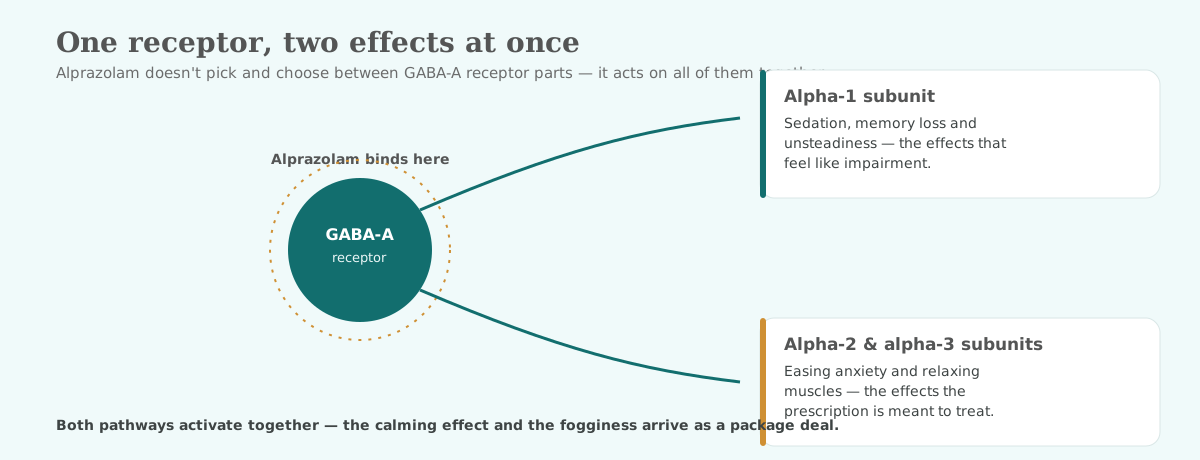
Xanax works through GABA, the chemical the brain uses to slow nerve activity down. Alprazolam attaches to the GABA-A receptor and makes GABA more effective there, so the "slow down" signal becomes stronger (George & Tripp, 2023).
The GABA-A receptor is built from several parts, and each one has a somewhat different job. Animal research indicates the alpha-1 part is responsible for sedation, memory loss, and unsteadiness. The alpha-2 and alpha-3 parts are responsible for easing anxiety and relaxing muscles (George & Tripp, 2023). Alprazolam does not pick and choose between these parts. It acts on all of them at once, affecting multiple receptor types at the same time, which is why the calming effects and the fogginess, sedation, or unsteadiness show up together.
A dose reaches its peak in the blood 1 to 2 hours after it is taken by mouth (FDA, 2021; George & Tripp, 2023). Clearing it takes much longer, and the speed varies a lot between people. The average half-life of alprazolam is about 11 hours, but in healthy adults it can range from 6 to 27 hours (FDA, 2021; George & Tripp, 2023). In other words, two people taking the same prescription can be carrying very different amounts of the drug by the same evening.
Is Xanax an Opioid?
No. Opioids act at opioid receptors. Alprazolam acts at the GABA-A receptor and is unrelated to opioids chemically and pharmacologically (George & Tripp, 2023).
The distinction matters most in an emergency, when someone has to decide what to give. There is a known antidote for opioid overdose, naloxone, sold as Narcan. There is no equivalent for Xanax.
Give naloxone in a mixed overdose, and it will reverse the effect of the opioid, but not the benzodiazepine. The person can still be sedated and breathing poorly after receiving the dose that was supposed to save them (Liu et al., 2021).
What Is Xanax Used For?
Xanax is FDA-approved for the management of anxiety disorder, short-term relief of anxiety symptoms, and the treatment of panic disorder with or without agoraphobia. The label states directly that anxiety or tension associated with the stress of everyday life usually does not require treatment with an anti-anxiety medication (FDA, 2021).
Dose matters to the risk profile. Management of panic disorder often requires average daily doses above 4 mg, and the label notes that the risk of dependence among patients treated for panic disorder may be higher than among those treated for less severe anxiety (FDA, 2021).
In 2020, the FDA required an updated boxed warning across the entire benzodiazepine class covering abuse, misuse, addiction, physical dependence, and withdrawal. The agency stated that taking benzodiazepines even at recommended dosages can lead to misuse, abuse, and addiction, and that physical dependence can develop when they are taken steadily for several days to weeks (FDA, 2020).
What Does Xanax Do? The Common Side Effects
The clearest picture comes from the placebo-controlled panic disorder trials in the prescribing information, with roughly 1,400 patients on Xanax and 1,200 on placebo (FDA, 2021).
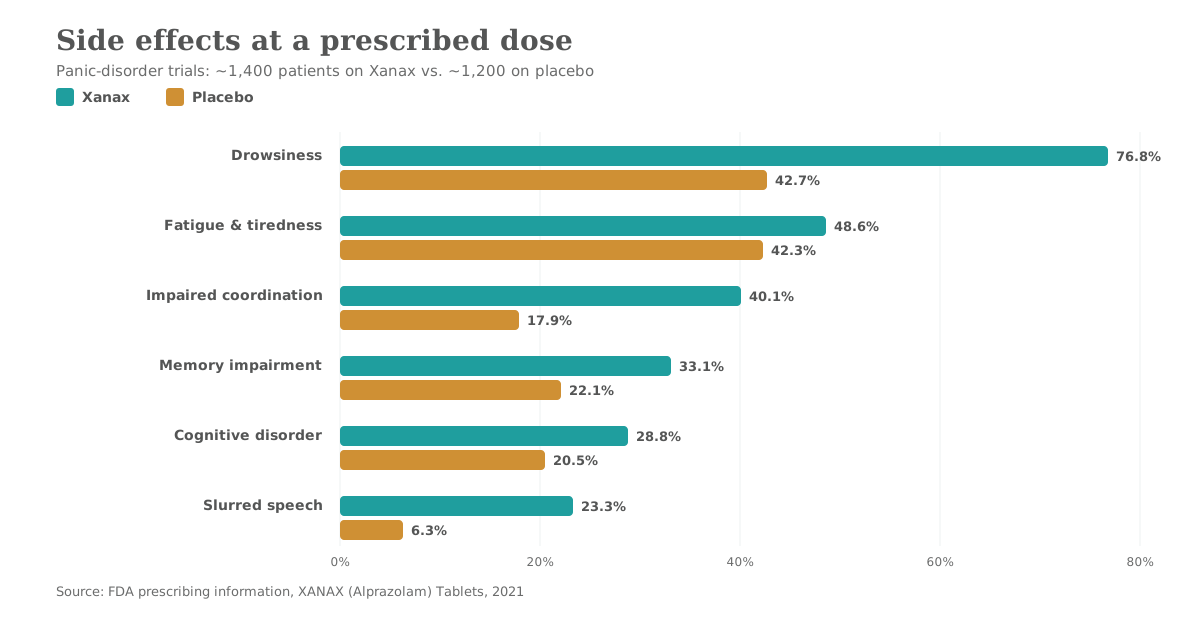
Benzodiazepines are also associated with temporary gaps in memory, loss of coordination, concentration difficulties, and changes in libido (FDA, 2021).
Does Xanax Make You Sleepy?
Yes, and it is the single most common effect. In the anxiety disorder trials, 41% of patients on Xanax reported drowsiness compared with 21.6% on placebo, and 15% required a dose reduction or discontinuation because of it (FDA, 2021).
Sedation is also an effect that can create risk outside the home. The label advises against driving or operating machinery until a person knows how alprazolam affects them, and that caution increases when it is combined with alcohol or other central nervous system depressants (FDA, 2021).
There is another point that often gets missed. Tolerance builds to the therapeutic relief effect, not to the side effects of Xanax. Over months the benefit fades while the memory problems and unsteadiness stay (FDA, 2021).
Side Effects When Someone Takes More Than Prescribed
The label lists the reactions specific to benzodiazepine abuse and misuse: amnesia, ataxia, blurred vision, confusion, disinhibition, disorientation, euphoria, impaired concentration and memory, irritability, aggression, slurred speech, and tremors.
The severe reactions include delirium, paranoia, suicidal ideation and behavior, seizures, coma, breathing difficulty, and death, which is more often associated with polysubstance use (FDA, 2021).
What is actually observable:
- Conversations that repeat, or entire conversations the person does not recall
- Slurred or thickened speech, particularly on the phone
- Unexplained bruises, and falls on stairs or curbs
- Flat affect alternating with irritability or unusual aggression
What Dependence Looks Like Day to Day
Physical dependence is a physiological adaptation to repeated dosing, and it develops on its own schedule. The label notes some risk of dependence even after relatively short-term use at 0.75 to 4.0 mg per day, with greater risk at doses above 4 mg per day and treatment longer than 12 weeks (FDA, 2021).
Addiction is a different phenomenon: difficulty controlling use, continued use despite harmful consequences, and giving a higher priority to the drug than to other obligations, to name a few (FDA, 2021).
In daily life, the pattern usually shows up in the practical before it shows up in anything more serious:
- The dose that used to cover a stretch of hours no longer lasts as long
- The bottle runs out days before the refill date, repeatedly
- Early refill requests, a second prescriber, or pills obtained from friends and family
- Pills carried at all times, and anxiety about being somewhere without them
- More impairment and less relief than a year earlier
Any change to a benzodiazepine regimen is a medical decision and belongs with a prescribing doctor.
When Xanax Gets Dangerous: Alcohol, Opioids, and Pressed Pills
The boxed warning leads with the combination risk: taking benzodiazepines and opioids together can cause heavy sedation, slowed breathing, coma, and death (FDA, 2021).
Alcohol is the second half of the problem and is often treated as harmless because it is legal. Fatalities have been reported in patients who overdosed on a single benzodiazepine, including alprazolam, in combination with alcohol. The alcohol levels in some of those patients were lower than the levels usually associated with alcohol-induced fatality (FDA, 2021).
In a CDC analysis of overdose deaths, 93% of benzodiazepine-involved deaths during the first half of 2020 also involved opioids, and 67% involved illicitly manufactured fentanyls. Alprazolam was the prescription benzodiazepine identified most often in those deaths (Liu et al., 2021).
Pressed tablets are a newer layer of risk, and the chemicals inside them keep changing. Bromazolam has been recently used to make counterfeit Xanax (Ehlers et al., 2024). A tablet that was not filled at a pharmacy cannot be identified by its stamp, its color, or its price. Counterfeits carry the same imprints as the real thing. Someone who has taken the same pressed bar for months without incident can receive a fentanyl-containing tablet the next time.
Signs That Require Emergency Care
An isolated benzodiazepine overdose typically presents as central nervous system depression with normal vital signs. Respiratory depression is the effect requiring immediate intervention (Kang et al., 2023).
Watch out for:
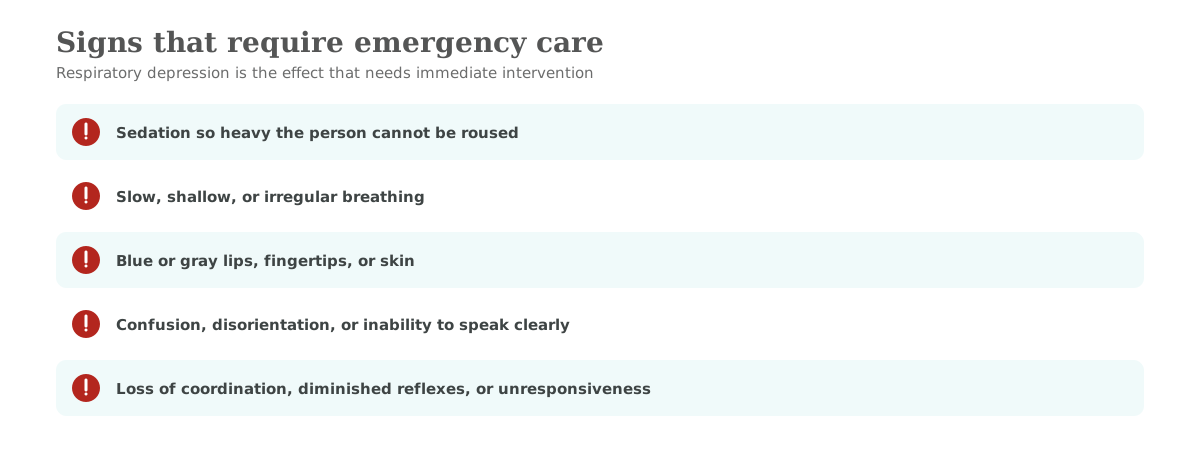
Call 911. Report every substance involved, including alcohol, because that information changes the treatment (Kang et al., 2023).
What Family Members Notice First
Families may notice a combination of patterns their loved ones show over time:
- Pill counts that do not match the fill date
- Sedation at hours that do not fit the prescribing schedule
- Drinking alongside the medication, downplayed as a drink or two
- Missed shifts or classes, other neglected responsibilities, and a shrinking social world
- Defensiveness or anger when the prescription is mentioned at all
The useful next step is a clinical assessment rather than a confrontation. An assessment documents the substance use history, screens for the anxiety, depression, or trauma sitting underneath it, evaluates medical risk, and produces a recommended level of care.
How Sunview Wellness Treats Benzodiazepine Use
At Sunview Wellness, we treat in vivo, which means treatment is adapted to your real life. Clients keep their jobs, stay in school, and sleep at home while receiving clinical care. There is no sober living funnel and no long-term housing commitment. Door-to-door transportation is provided at no cost so that attendance stays realistic for someone who is still working.
Care is delivered at three levels: Partial Hospitalization (PHP), Intensive Outpatient (IOP), and Outpatient Programming (OP). Our benzodiazepine treatment program follows clients well past the standard first month, because dependence built up over weeks or months does not resolve on a 30-day timeline.
If you or someone in your family have been taking more Xanax than prescribed, or combining it with alcohol or opioids, contact us for an assessment.
We're in network with most major insurance carriers, including Florida Medicaid plans. Our admissions team will verify your benefits and explain options before you commit to anything specific.
Key Takeaways
- Xanax is alprazolam, a Schedule IV benzodiazepine approved for anxiety symptoms related to generalized anxiety disorder, depressive disorders, and panic disorder, and it is not an opioid.
- Drowsiness, impaired coordination, memory impairment, and slurred speech are the expected effects at prescribed doses, not signs of misuse on their own.
- Tolerance develops to the anxiety relief but not to the memory and cognitive impairment, so impairment can outlast the benefit.
- Physical dependence can develop with steady use over days to weeks, even exactly as prescribed, and shows up first in logistics like refill timing rather than anything alarming.
- Nearly all benzodiazepine overdose deaths involve another substance, most often an opioid, and alcohol raises fatality risk at levels that would not be dangerous on their own.
Outpatient Drug and Alcohol Treatment in West Palm Beach
Sunview Wellness is a Joint Commission accredited outpatient drug rehab in West Palm Beach serving adults 18 and older. Our programs treat substance use disorders involving benzodiazepines, alcohol, opioids, stimulants, and polysubstance patterns, alongside the anxiety, depression, and trauma that so often exist underneath the substance use.
Our PhD-led clinical team brings more than 50 years of combined experience and works psychodynamically, using Inner Child Therapy as an integrative modality to address the shame, inadequacy, and fear underneath substance use.
Call (561) 269-3175
Sources
- U.S. Food and Drug Administration. (2021). XANAX (Alprazolam) Tablets, USP: Prescribing Information. Drugs@FDA. U.S. Food and Drug Administration.
- U.S. Food and Drug Administration. (2020, September 23). FDA Requiring Boxed Warning Updated to Improve Safe Use of Benzodiazepine Drug Class. Drug Safety Communications. U.S. Food and Drug Administration.
- George, T., & Tripp, J. (2023). Alprazolam. StatPearls. StatPearls Publishing.
- Kang, M., et al. (2023). Benzodiazepine Toxicity. StatPearls. StatPearls Publishing.
- Liu, S., et al. (2021, August 27). Trends in Nonfatal and Fatal Overdoses Involving Benzodiazepines — 38 States and the District of Columbia, 2019–2020. MMWR Morbidity and Mortality Weekly Report, 70(34), 1136–1141.
- National Institute on Drug Abuse. (2024). Benzodiazepines and Opioids. Research Topics. National Institute on Drug Abuse.
- Ehlers, D., et al. (2024, January 5). Notes from the Field: Seizures, Hyperthermia, and Myocardial Injury in Three Young Adults Who Consumed Bromazolam Disguised as Alprazolam — Chicago, Illinois, February 2023. MMWR Morbidity and Mortality Weekly Report, 72(52–53), 1392–1393. Centers for Disease Control and Prevention.