Molly is the powder or crystal form of MDMA (3,4-methylenedioxymethamphetamine), a synthetic drug that acts as both a stimulant and a mild hallucinogen (National Institute on Drug Abuse [NIDA], 2024a). Most people who wonder what molly is have something specific in front of them: a capsule that matches no prescription in the house, or a bag of off-white crystals. Here is what is actually being sold under the name molly, what it does to the body, and what to do next.
What Does "Molly" Stand For?
Molly is a street name for MDMA, shorthand for "molecular," a marketing term meant to suggest purity. It is typically sold in clear gel capsules, as loose powder, or as chunky crystals ranging from white to tan or brown (Drug Enforcement Administration [DEA], 2024).
Molly is similar to ecstasy, yet it comes in a different package. Ecstasy refers to pressed tablets stamped with logos and colors, while molly refers to capsules and crystals. Both are human-made, come from the same unregulated supply, and drug checking data shows no dependable purity advantage for either form (Sevigny et al., 2024).
MDMA is a Schedule I controlled substance with no accepted medical use outside approved research settings (Figurasin et al., 2024).
Is Molly MDMA?
Of 4,700 samples submitted to a drug checking service between 1999 and 2023, only 48% contained MDMA and nothing else, and almost 200 different adulterants were identified across those years (Sevigny et al., 2024).
The recent trend is better than the historical average. The share of samples containing MDMA alone rose from about 56% in 2017 to roughly 74% in 2023 (Sevigny et al., 2024). The improvement is real, yet it still leaves roughly one sample in four containing something other than MDMA.
Dose is the second unknown. Even when a capsule does contain MDMA, the amount is not standardized, and analyses of products sold as ecstasy or molly have documented wide variation alongside substitute compounds such as MDA (3,4-methylenedioxyamphetamine) and MDEA (3,4-methylenedioxy-N-ethylamphetamine) (Figurasin et al., 2024).
These are close chemical relatives of MDMA: MDA is more stimulating, more hallucinogenic, and longer lasting, while MDEA tends to be duller and more sedating.
Two capsules from the same bag can differ, which is why a person who has used the drug before without incident can have a medical emergency the next time.
Is Molly Meth?
Molly is not methamphetamine, but methamphetamine has been repeatedly found in samples of MDMA (NIDA, 2024a).
MDMA is a derivative of amphetamine, so it is structurally related to methamphetamine. The methylenedioxy group attached to the molecule shifts its activity toward serotonin, which is why MDMA produces emotional closeness and sensory intensity rather than the primarily dopaminergic stimulation associated with methamphetamine (Figurasin et al., 2024). They are relatives, but they are not the same drug.
The supply is where the two intersect. Chemical analyses of drugs sold as MDMA have identified methamphetamine, amphetamine, synthetic cathinones, ketamine, and MDA as hidden ingredients (NIDA, 2024a). In a New York City nightlife study, people who said they had used ecstasy tested positive for substances they had not reported, including methamphetamine (Palamar et al., 2023).
A capsule sold as molly is not methamphetamine by definition, but methamphetamine cannot be ruled out purely on price or appearance.
What Testing Finds in Products Sold as Molly
Drug checking has identified 199 distinct adulterants in the alleged MDMA supply over 25 years (Sevigny et al., 2024). Here are some of the substances found in molly.
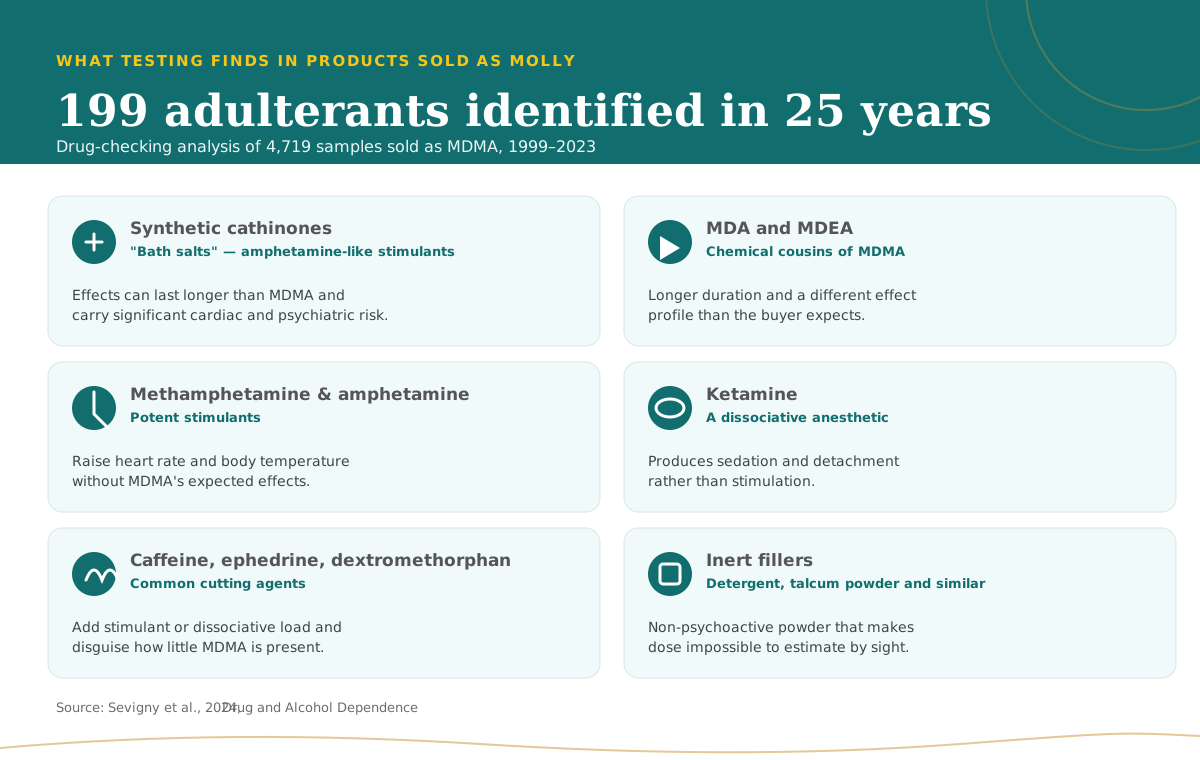
The practical point is that the "label" of molly carries no information. The person selling it is usually repeating what they were told, and the capsule itself has no specific dose, no batch, and no single manufacturer.
What Does Molly Feel Like, and How Long Does It Last?
Effects generally begin within 20 minutes to an hour of swallowing a dose, with peak blood concentration around two hours (Figurasin et al., 2024). People report feeling energetic, alert, emotionally open, and unusually attuned to touch, sound, and light. Effects peak shortly after onset and last an average of about 3 hours (NIDA, 2024a).
The physical signs are often what a family member notices first:
- Jaw clenching and teeth grinding
- Dilated pupils
- Heavy sweating
- Elevated heart rate
- Restless legs
- An inability to sleep (NIDA, 2024a; Figurasin et al., 2024)
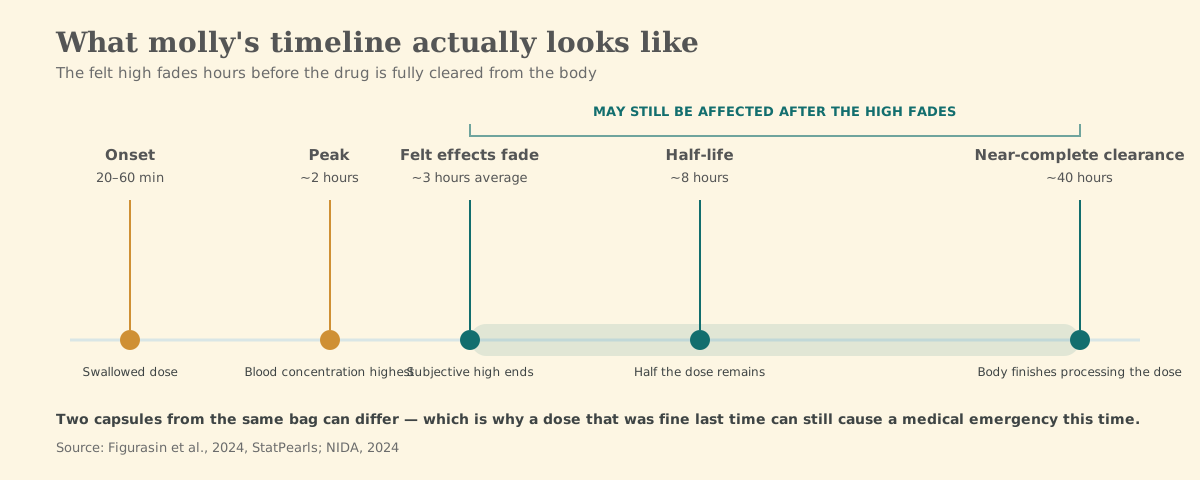
MDMA has an elimination half-life of roughly eight hours, and near-complete clearance takes approximately 40 hours, so someone may still be affected well after the subjective effects have faded (Figurasin et al., 2024).
The days that follow matter clinically. People who use MDMA regularly report poor sleep, loss of appetite, confusion, low mood, anxiety, irritability, and problems with memory and concentration (NIDA, 2024a).
The Risks That Send People to the Emergency Room
Deaths involving MDMA are uncommon relative to how often it is used, but the medical emergencies that do occur escalate quickly.
- Overheating. MDMA interferes with the body's ability to regulate temperature. Combined with exertion in a hot, crowded setting, core temperature can climb past 105°F, leading to muscle breakdown, kidney and liver failure, brain swelling, and death (Figurasin et al., 2024; DEA, 2024).
- Dangerously low sodium. MDMA increases release of antidiuretic hormone, causing fluid retention. Combined with drinking large amounts of water, sodium can fall far enough to cause seizures, brain swelling, and coma (Figurasin et al., 2024).
- Serotonin syndrome. Combining MDMA with selective serotonin reuptake inhibitors (SSRIs), other antidepressants, or additional serotonergic drugs raises the risk of a potentially life-threatening reaction (NIDA, 2024a; Figurasin et al., 2024).
- Cardiovascular strain. Rapid heart rate, high blood pressure, and arrhythmias are common in acute toxicity, and risk rises sharply when an unknown stimulant adulterant is stacked on top (Figurasin et al., 2024).
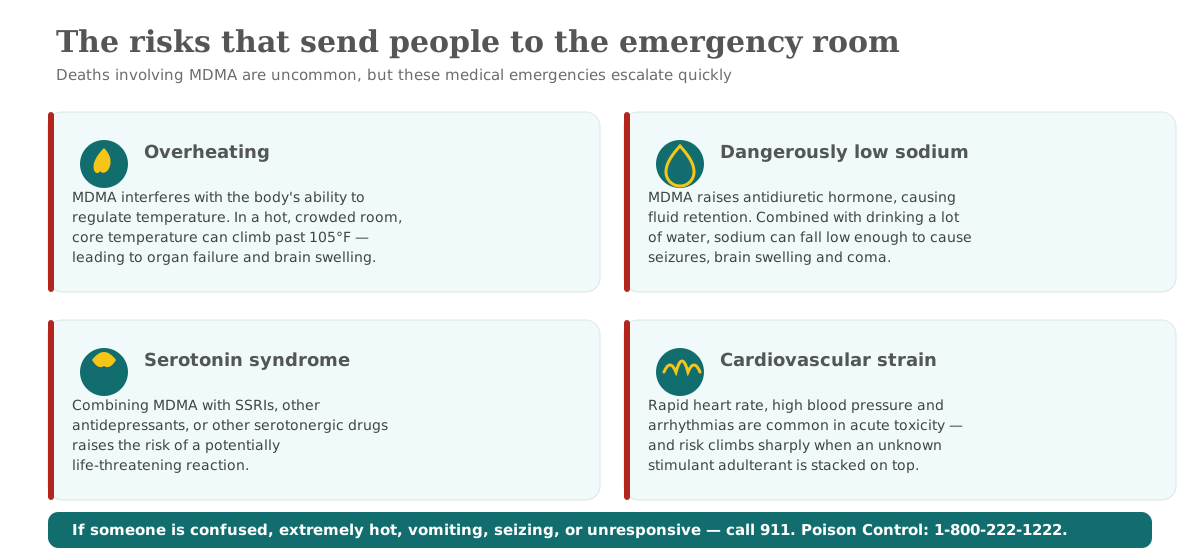
If someone is confused, extremely hot, vomiting, having a seizure, or unresponsive, call 911. Poison Control can be reached at 1-800-222-1222.
Is Molly Addictive?
Research indicates that MDMA is potentially addictive, though it has been studied less thoroughly than other substances. Some people who use it report symptoms consistent with a substance use disorder, including tolerance, withdrawal effects, cravings, and continued use despite negative consequences (NIDA, 2024a).
In outpatient treatment, MDMA alone is rarely the whole picture. The pattern that brings families in usually involves several substances, a widening set of occasions for use, and an underlying mood or anxiety condition that use both masks and worsens. That combination is what dual diagnosis treatment is built to address, and it is the reason a clinical assessment looks at far more than capsules of molly.
What to Do If You Found a Capsule or a Baggie
If you found a capsule among your loved one's things, visual inspection will tell you nothing about dose or contents. Community drug checking programs using laboratory methods are more accurate than any at-home method (NIDA, 2024b).
None of this makes an unregulated product safe, yet it calls for a conversation with your loved one and a clinical team. Lead with what you found and what concerns you. Be curious, don't accuse. Ask how often, with what, and in what settings they might be using molly, because frequency and combinations matter more than the single object in your hand.
Watch for these patterns:
- Use during the week
- Use while alone
- Escalating amounts
- Money or possessions disappearing
- Withdrawal from previous friendships and activities
- Missed work or classes
- Low mood that deepens after each episode of use
Any of these justify a professional assessment, which reviews substance use history, screens for co-occurring depression, anxiety, and trauma, evaluates medical risk, and produces a recommended level of care.
How Sunview Wellness Treats Substance Abuse
At Sunview Wellness, we treat in vivo, which means recovery happens inside a real life. Clients keep their jobs, stay in school, and sleep at home while receiving clinical treatment. There is no sober living funnel and no long-term housing commitment. Door-to-door transportation is provided at no cost so that attending treatment stays realistic.
Care is delivered at three levels:
- PHP — Partial Hospitalization. Intensive treatment five days a week. Suited to someone after inpatient discharge or when maximum structure is needed.
- IOP — Intensive Outpatient. Three days a week, daytime or evenings.
- OP — Outpatient Program. One day a week, mornings, for maintenance and step-down care.
We're in network with most major insurance carriers, including Florida Medicaid plans. If you have found something you cannot identify and you do not know what comes next, our admissions team can verify your benefits, schedule an assessment, and explain your options.
Key Takeaways
- Molly is the powder or capsule form of MDMA, and the difference between molly and ecstasy is packaging rather than chemistry.
- Drug checking shows that fewer than half of samples sold as MDMA contained MDMA alone, and the dose is never known from appearance.
- Molly is not methamphetamine, but methamphetamine, synthetic cathinones, MDA, and ketamine all turn up in products sold under this name.
- Overheating, dangerously low sodium, and serotonin syndrome are the medical emergencies that bring MDMA users to the emergency room.
- MDMA is potentially addictive, and its use may be part of a broader pattern that warrants a professional assessment rather than a single conversation.
Outpatient Drug and Alcohol Treatment in West Palm Beach
Sunview Wellness is a Joint Commission accredited outpatient drug rehab in West Palm Beach serving adults 18 and older. Our programs treat substance use disorders involving MDMA, stimulants, alcohol, opioids, and polysubstance patterns, alongside the depression, anxiety, and trauma that so often sit underneath them.
Our PhD-led clinical team brings more than 50 years of combined experience and works psychodynamically, using Inner Child Therapy as an integrative modality to address the shame, inadequacy, and fear underneath substance use.
Call (561) 269-3175
Sources
- Sevigny, E. L., Thyssen, S., Erowid, E., & Lea, R. (2024). Misrepresentation of MDMA in the United States, 1999–2023. Drug and Alcohol Dependence, 264, Article 112467.
- National Institute on Drug Abuse. (2024a). MDMA (Ecstasy/Molly). Research Topics. National Institute on Drug Abuse.
- Figurasin, R., Vearrier, D., et al. (2024). 3,4-Methylenedioxymethamphetamine (MDMA) Toxicity. StatPearls. StatPearls Publishing.
- Palamar, J. J., et al. (2023). Trends in Reported and Biologically Confirmed Drug Use Among People Who Use Ecstasy in the Nightclub/Festival-Attending Population, 2016–2022. Drug and Alcohol Dependence Reports, 9, Article 100198.
- Drug Enforcement Administration. (2024). Ecstasy or MDMA (Also Known as Molly). Drug Fact Sheets. U.S. Department of Justice.
- National Institute on Drug Abuse. (2024b). Drug Checking. Research Topics. National Institute on Drug Abuse.