Alcohol is a depressant. It slows down the brain and spinal cord by increasing gamma-aminobutyric acid (GABA), the chemical that calms nerve cells, and suppressing glutamate, the chemical that fires them up (Canver & Gomez, 2024). Here is what alcohol does to your mood, why the calming effect wears off so quickly, and what changes when drinking and depression are treated together.
Hangxiety: Why Anxiety Gets Worse After Drinking
This is the part most people experience without knowing what to call it. When you drink regularly, your brain stays balanced by making extra glutamate and reducing its own GABA. Take the alcohol away, and you are left with too little GABA and too much glutamate at once. This overstimulated state is withdrawal (Canver & Gomez, 2024).
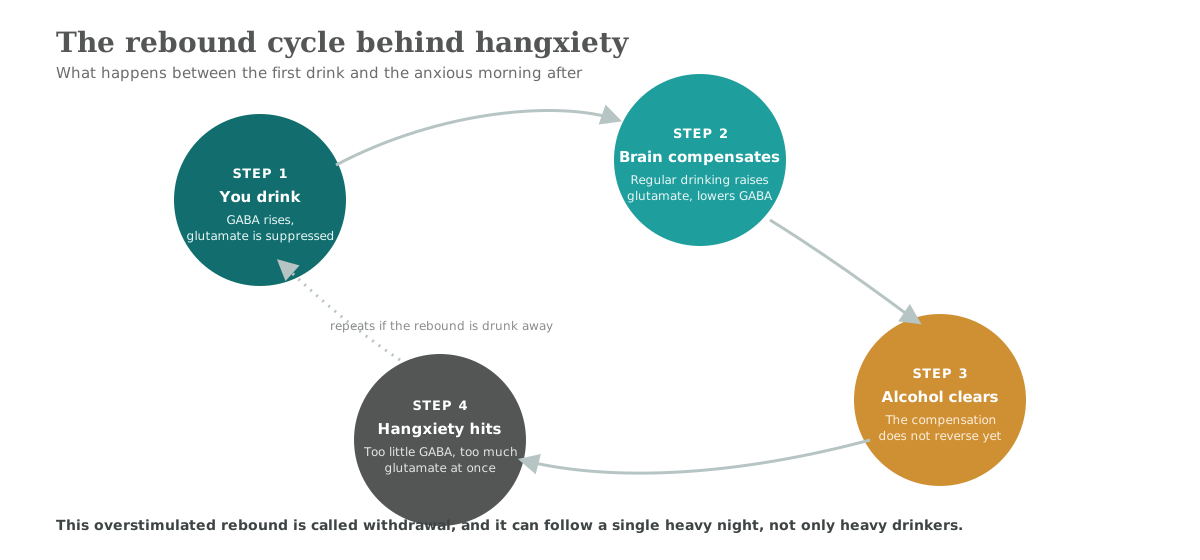
You do not have to be physically dependent on alcohol for this to happen. Anxiety can show up after a single heavy night of drinking, even in someone with no anxiety disorder. It builds between drinking episodes and peaks during withdrawal (National Institute on Alcohol Abuse and Alcoholism [NIAAA], 2025a).
Among people who are sensitive to hangovers, about 30% report depression symptoms and 18% report anxiety symptoms while hungover, and people who already run higher on both are the most vulnerable (Kim et al., 2023). The people most likely to drink for relief are the people most likely to pay for it the next day.
Sleep makes it worse. Even moderate amounts of alcohol can disrupt sleep and reduce REM sleep, and it can take 30 days or more without drinking for sleep patterns to recover (NIAAA, 2025a). You can fall asleep fast and still wake up exhausted, which lowers your tolerance for anxiety before the day even starts.
Does Alcohol Cause Depression?
Being a depressant and causing depression are two different claims. Mental health conditions can lead to alcohol use disorder (AUD), partly because people drink to cope. Drinking can also lead to mental health conditions, especially when it starts in adolescence or continues for years. The two can also share genetic and environmental risk factors, including trauma and difficult childhood experiences (NIAAA, 2025a).
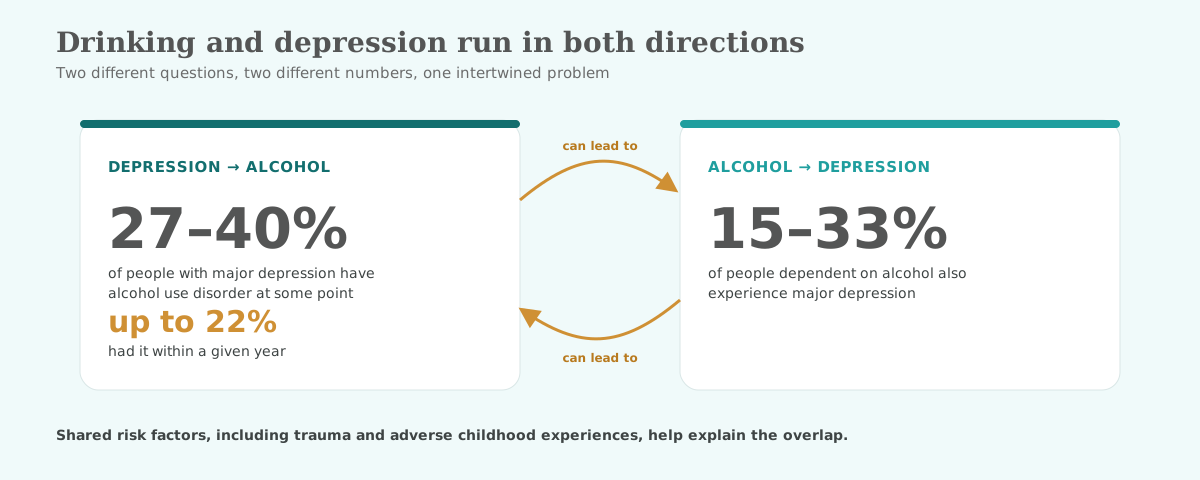
Among people with major depression, 27% to 40% have AUD at some point in their lives, and up to 22% had it in a given year (NIAAA, 2025a). Among people dependent on alcohol, an estimated 15% to 33% also experience major depression (Winkler & Grahame, 2025).
Alcohol does not push everyone who drinks into depression. Heavy alcohol use can worsen depressive symptoms, though, and when both are present they can reinforce each other, raising the risk of relapse and worse outcomes overall (NIAAA, 2025a).
Is Alcohol a Depressant or a Stimulant?
Alcohol is called a depressant because of its overall effect on your nervous system, not because of how you feel during the first hour after drinking. How much you drink shapes what you notice: smaller amounts can feel stimulating, while larger amounts feel sedating (Canver & Gomez, 2024).
Why the First Drink Feels Like a Lift
The GABA boost is what you may feel in that first hour: lowered inhibitions, a buzz or a sense of relaxation, and eventually drowsiness (Canver & Gomez, 2024). If you are already experiencing depression or anxiety, the relief can feel real, which makes the behavior easy to repeat. The problem is duration. Relief may last a few hours; the lingering effects can last much longer.
How to Stop Anxiety After Drinking Alcohol
Nothing speeds up the rebound except time. A few things can keep it from getting worse.
- Drink water and eat a real meal. Being dehydrated and running on an empty stomach makes you shaky and lightheaded, which feels a lot like anxiety.
- Do not drink again to fix it. A morning drink increases GABA and delays the crash until later in the day. That is how occasional drinking turns into daily drinking.
- Skip as-needed sedatives. For people who drink heavily, benzodiazepines taken as needed for anxiety, mood, or sleep carry real misuse and overdose risk and are specifically discouraged. Talk with a doctor first (NIAAA, 2025a).
- Move. Light physical activity burns off the physical restlessness the rebound creates.
- Protect the next night of sleep. One good night of sleep does more for your mood than anything you try during the hangover.
- Write down what happened. Track how much, how often, and what triggered the drinking.
If the anxiety keeps coming back and the drinking continues anyway, the question becomes less about managing a hangover and more about why the drinking continues when you already know the consequences.
Drinking to Cope With Depression
Alcohol is easy to access, and people commonly use it to manage anxiety. In the short term, it may seem to help. Over time, though, heavy drinking and repeated withdrawal can worsen both anxiety symptoms and the drinking pattern itself (NIAAA, 2025a).
Research on drinking motives adds a layer here. People often say they drink to change how they feel, but in the moment, their reported relief does not line up with any measurable improvement in mood; people high in drinking-to-cope motives feel better after a drink even when their actual emotional state has not changed (Echeverri et al., 2025). That belief is often enough to keep the habit going, whether or not the alcohol is doing what it is credited for.
Dual diagnosis treatment is built specifically for the cases where drinking is the main way you cope with a mood or anxiety condition. An assessment looks at both alcohol use and mental health symptoms and how they are intertwined.
Alcohol-Induced Depression Versus Depression on Its Own
Low mood is common during alcohol withdrawal, and by most accounts it improves after 2 to 4 weeks without alcohol (Winkler & Grahame, 2025). If the symptoms are still there after a month, it may be a sign of underlying depression that warrants individualized treatment.
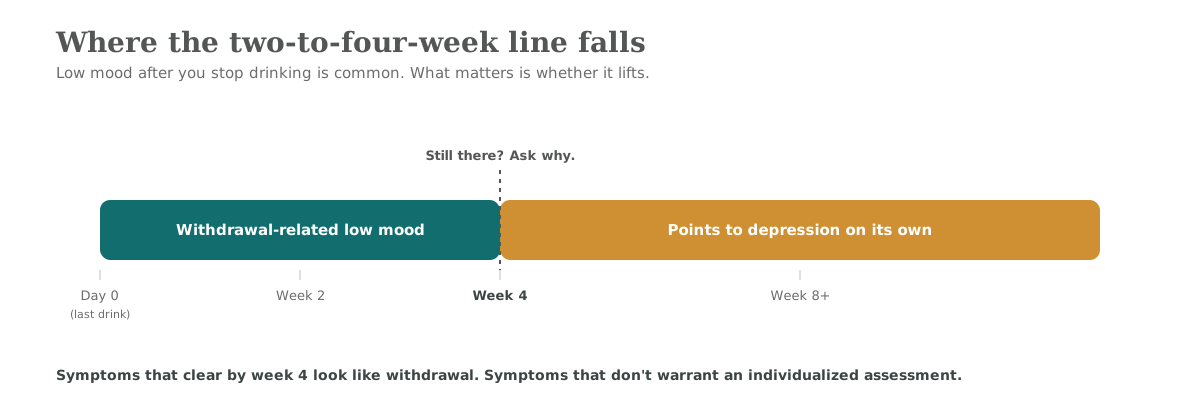
In treatment, a clinician builds a timeline with questions including:
- How old were you when the mood symptoms started, and when did the regular drinking start?
- What is the longest stretch you have gone without drinking, and were the mood symptoms present then?
- Is there a family history of mood disorders, alcohol problems, or psychiatric hospitalization?
Depression scores and alcohol scores tend to fluctuate together, which is why relevant care tracks both (NIAAA, 2025a).
Why Treating Both at Once Changes the Outcome
Stopping drinking can improve a co-occurring mental health condition on its own. Treating the mental health symptoms alone is usually not enough to reduce drinking. Treating both together is more effective for recovery than treating either one in isolation (NIAAA, 2025a).
Getting care is the bottleneck: of the 28 million people aged 12 and older with an alcohol use disorder in the past year, only about 2 million received any treatment for it (NIAAA, 2025b). Outpatient care exists partly to close that gap, because it allows people to receive care while continuing to live at home and maintain work, school, and other responsibilities.
How Sunview Wellness Treats Alcohol Use and Co-Occurring Depression
At Sunview Wellness, we treat in vivo, which means recovery happens inside a real life. Clients keep their jobs, stay in school, and sleep at home while receiving clinical treatment. There is no sober living funnel and no long-term housing commitment. Door-to-door transportation is provided at no cost so that attending treatment stays realistic.
Care is delivered at three levels: Partial Hospitalization (PHP), Intensive Outpatient (IOP), and Outpatient Programming (OP). Our alcohol use disorder program treats the drinking and the mood condition underneath it together, not as two separate referrals.
We're in network with most major insurance carriers, including Florida Medicaid plans. Our admissions team can verify your benefits, schedule an assessment, and explain your options.
Key Takeaways
- Alcohol is a depressant because it increases GABA and suppresses glutamate. That is separate from whether it causes depression.
- Drinking and depression feed each other. Among people with major depression, 27% to 40% have an alcohol use disorder at some point.
- Hangxiety is a rebound state caused by too little GABA and too much glutamate after alcohol wears off, and it can follow a single heavy night.
- Mood symptoms that clear within 2 to 4 weeks without drinking suggest alcohol-induced depression. Symptoms that persist beyond that point point to depression on its own.
- Stopping drinking may improve a co-occurring mental health condition, but treating that condition alone rarely reduces the drinking.
Outpatient Drug and Alcohol Treatment in West Palm Beach
Sunview Wellness is a Joint Commission accredited outpatient drug and alcohol rehab in West Palm Beach, serving adults 18 and older. Our programs treat substance use disorders involving benzodiazepines, alcohol, opioids, stimulants, and polysubstance patterns, alongside the anxiety, depression, and trauma that so often exist underneath the substance use.
Our PhD-led clinical team brings more than 50 years of combined experience and works psychodynamically, using Inner Child Therapy to reach the shame, inadequacy, and fear underneath substance use.
Call (561) 269-3175
Sources
- National Institute on Alcohol Abuse and Alcoholism. (2025a). Mental Health Issues: Alcohol Use Disorder and Common Co-occurring Conditions. The Healthcare Professional’s Core Resource on Alcohol. National Institute on Alcohol Abuse and Alcoholism.
- Canver, B., & Gomez, K. (2024). Alcohol Withdrawal Syndrome. StatPearls. StatPearls Publishing.
- Winkler, M., & Grahame, N. J. (2025). Species Differences in Comorbid Alcohol Use Disorder and Major Depressive Disorder: A Narrative Review. Alcohol, Clinical and Experimental Research, 49(4), 712–724.
- Kim, D., et al. (2023). Depression, Anxiety, and Stress Among Hangover-Sensitive and Hangover-Resistant Drinkers. Journal of Clinical Medicine, 12(8), Article 2766.
- Echeverri, D., et al. (2025). Drinking Motives and Alcohol’s Acute Effects in a Social Laboratory Setting. Psychology of Addictive Behaviors. Advance online publication.
- National Institute on Alcohol Abuse and Alcoholism. (2025b). Alcohol Treatment in the United States. Alcohol Facts and Statistics. National Institute on Alcohol Abuse and Alcoholism.